
Baseball strategies, detailed in resources like the American Baseball Coaches Association’s guides, emphasize that the game is a mental challenge.
Understanding basic tactical baseball strategies – signals, lineups, positioning, stealing, hitting, and running – is crucial for success on the diamond.
What are Baseball Situations?
Baseball situations encompass the diverse game scenarios demanding quick thinking and strategic responses from players and managers alike. These aren’t merely about physical prowess; they’re about understanding the tactical landscape.
As highlighted by resources like the Human Kinetics Library of Congress, baseball isn’t just about skill, but a “thinker’s game.” Situations range from defensive alignments with runners on base to offensive strategies like bunting or stealing.
Effective play requires recognizing these moments and executing pre-planned responses, or adapting on the fly, based on hitter tendencies and game context.
Importance of Understanding Situational Baseball
Understanding situational baseball is paramount because it elevates the game beyond individual talent, demanding strategic awareness and collective execution. As emphasized by coaching guides, strategy is key to winning.
Knowing when to intentionally walk a batter, change pitchers, or employ a defensive shift – all situational decisions – can dramatically alter a game’s outcome.
Coaches must impart this knowledge to players, fostering a team capable of reacting intelligently to evolving circumstances, maximizing opportunities, and minimizing risks.

Defensive Situations
Defensive positioning, covering bases, and backing up throws are vital, as detailed in TRC Towson Council Baseball guides, for preventing runs and securing outs.
Fly Ball with No Runners
When a fly ball occurs with no runners on base, specific defensive responsibilities are crucial for a smooth play. The pitcher should move to a backup position situated between the mound and second base, prepared to cover any throw.
The catcher’s role involves following the runner towards first base, providing backup in case of an overthrow. Simultaneously, the first baseman must confirm the batter touches first before covering the base itself.
The second baseman moves directly to second base to receive potential throws, while the shortstop positions themselves as the cut-off man for throws headed towards second. Lastly, the third baseman covers third base, and the left fielder supports the center fielder.
Pitcher’s Role
During a fly ball situation with no runners, the pitcher’s primary responsibility is to immediately move into a backup position. This positioning is strategically located between the pitching mound and second base, ensuring readiness for any potential throw.
This proactive movement allows the pitcher to quickly react and support the infield, covering the base path if the throw from an outfielder is needed. Maintaining awareness of all base runners, even when none are present, is vital.

The pitcher’s alertness contributes to a swift and efficient defensive play, minimizing any opportunities for offensive advancement.
Catcher’s Role
When a fly ball is hit with no runners on base, the catcher’s immediate action is to diligently follow the runner towards first base. This movement serves as a crucial backup in case of an errant throw from the outfield attempting to retire the batter at first.
The catcher’s positioning ensures a quick response to support the first baseman, preventing potential base-running errors and maintaining defensive stability.
This proactive support demonstrates the catcher’s awareness and commitment to a solid defensive play.
First Baseman’s Role
During a fly ball situation with no runners on base, the first baseman’s primary responsibility is to meticulously ensure the batter touches first base. This confirms the out and prevents any potential base-running advancements.
Immediately after verifying the batter’s contact with first, the first baseman swiftly moves to cover the base itself.
This proactive positioning prepares them to receive throws and secure further outs, solidifying the defensive play.
Ground Ball with No Runners
When facing a ground ball with no runners, strategic infield and outfield positioning are paramount for a successful defensive play. The infielders must react quickly, anticipating the ball’s trajectory and positioning themselves for optimal fielding.
Outfielders provide crucial backup, covering potential gaps and supporting the infield.
Effective communication and swift reactions are key to turning ground balls into outs, minimizing the opponent’s opportunities to advance.
Infield Positioning
Strategic infield positioning on ground balls demands alertness and anticipation. The shortstop often moves towards the batter to field potential grounders, acting as the primary defender.
Second and third basemen adjust based on the batter’s tendencies, covering their respective sides of the infield.
The first baseman prepares to receive throws and cover first base, ensuring outs are secured efficiently. Quick reactions and precise movements are vital for successful infield play.
Outfield Positioning
Effective outfield positioning is crucial when no runners are on base, requiring awareness of the hitter and potential ball flight. Center fielders take the initial lead, covering the largest area, while left and right fielders position themselves accordingly.
Left fielders back up the center fielder, anticipating balls hit to their direction.
Outfielders must communicate and adjust their positioning based on the batter’s strengths and the game situation, ensuring optimal coverage and quick reactions to make plays.
First and Third Situation
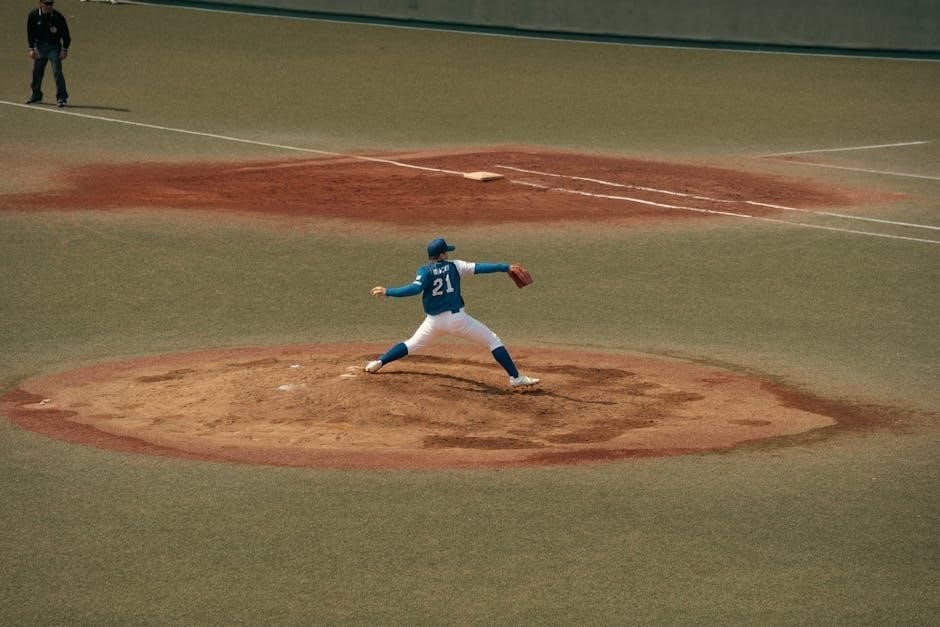
Defensive alignment with runners on first and third demands heightened awareness and precise execution. The infield must be prepared for potential double-play attempts or squeeze plays. The shortstop acts as the crucial cut-off man for throws to second base, facilitating quick transitions.
Communication is paramount, ensuring all infielders know their responsibilities.
Outfielders must also be alert, backing up potential throws and anticipating plays at the plate, ready to prevent runs.
Defensive Alignment
Defensive alignment in the first and third situation requires strategic positioning. The shortstop moves towards the second base to facilitate a potential double play, while the third baseman covers third base diligently. The first baseman prepares to receive throws and cover first.
The pitcher stays alert, backing up throws to second.
Communication between infielders is vital for quick reactions and seamless execution of plays, preventing runs and maintaining control of the inning.
Cut-Off Plays
Cut-off plays are essential when preventing runners from advancing, particularly in the first and third situation. The shortstop assumes the role of the cut-off man, positioned to receive throws from the outfield intended for second base.
This allows for a quick, accurate relay to home plate or another base, minimizing the runner’s progress.
Proper positioning and a strong, precise throw are critical for successful cut-off plays, demanding practice and coordination.
Runner on Second, No Outs
With a runner on second and no outs, the defense must prioritize preventing the run from scoring and avoiding a big inning. A key strategy is the double play, requiring precise infield positioning and execution.
Pitching becomes crucial; inducing ground balls is paramount to turning the double play.
The pitcher must focus on control and location, avoiding walks that would extend the inning and increase the scoring threat.
Double Play Strategy
Executing a double play with a runner on second and no outs is a game-changing defensive maneuver. The infield positioning is critical, with the shortstop ranging wide to cover the hole and the second baseman covering first.
A quick, accurate throw from the shortstop to the second baseman, and then to first, is essential.
The pitcher’s role is to deliver a pitch that induces a ground ball, ideally to the right side of the infield, maximizing the double play opportunity.
Pitching Approach
When facing a runner on second with no outs, the pitcher’s primary goal is to induce weak contact and avoid the big inning. Focus on locating pitches effectively, prioritizing ground balls over fly balls to facilitate double-play opportunities.
Minimize walks and wild pitches, as these advance the runner and increase scoring chances.
A conservative approach, emphasizing control and movement, is often more effective than overpowering the hitter in this crucial situation.
Late-Inning Defensive Shifts
Modern baseball increasingly utilizes data analytics to optimize defensive positioning in late innings, particularly against hitters with pronounced pull tendencies.
Shifts involve strategically repositioning infielders – and sometimes outfielders – to cover anticipated batted ball locations, increasing the probability of an out.
Managers leverage scouting reports and historical data to exploit hitter weaknesses and maximize defensive efficiency during high-leverage moments.

Utilizing Data Analytics
Data analytics have revolutionized late-inning defensive strategies, moving beyond traditional positioning based on gut feeling or simple tendencies.
Teams now employ sophisticated metrics – launch angle, exit velocity, pull percentage – to predict where a hitter is most likely to make contact.
This data informs precise shifts, maximizing the probability of converting batted balls into outs and gaining a crucial defensive advantage in critical game situations.
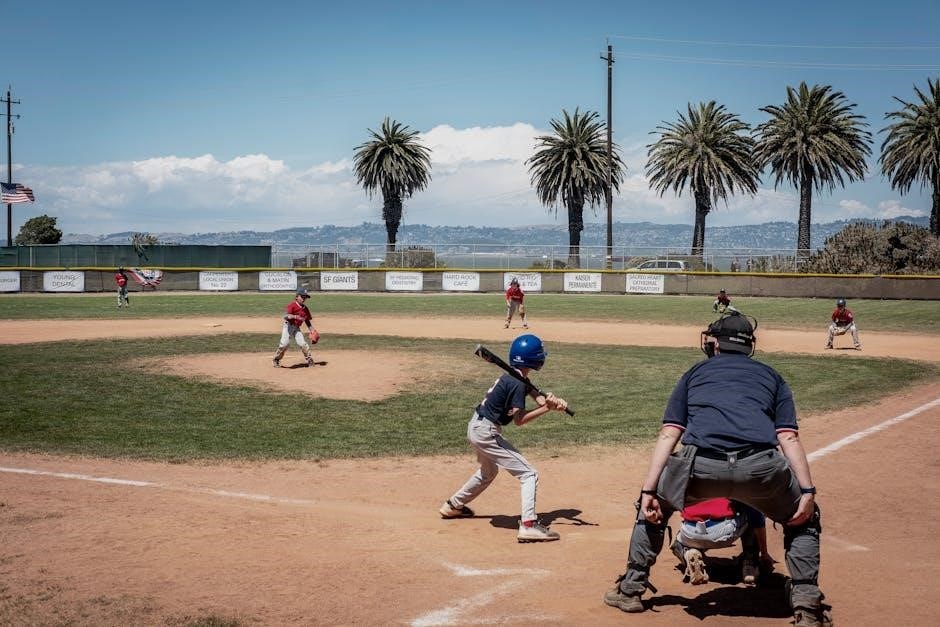
Shifting Against Pull Hitters
A common application of defensive shifts targets hitters with a strong propensity to pull the ball, often towards the first or third base side of the infield.
By overloading the infield with defenders on the pull side, teams aim to reduce the hitter’s batting average on balls in play and increase the chances of a ground ball out.
This strategy relies on accurate data regarding a hitter’s spray chart and historical tendencies, maximizing the effectiveness of the defensive alignment.

Offensive Situations

Offensive strategies, encompassing bunting, base stealing, and hitting with runners, require astute decision-making and execution to capitalize on scoring opportunities.
Bunting Strategies
Bunting is a fundamental offensive tactic, demanding precision and understanding of game context. The sacrifice bunt advances runners, prioritizing their movement over the batter reaching base, often in tight scoring situations.
Conversely, the drag bunt aims for the batter to also reach first base, catching the defense off guard and creating base-running opportunities. Successful bunting requires adept bat control and quick decision-making, shifting momentum and challenging opposing fielders.
Sacrifice Bunt
The sacrifice bunt is a strategic play where the batter intentionally gets out to advance one or more runners into scoring position. This tactic prioritizes run-scoring potential over individual advancement, typically employed with fewer than two outs.
Effective execution demands precise placement of the bunt, ensuring it’s difficult for the fielding team to make a quick play. It’s a calculated risk, trading an out for increased offensive leverage, a core element of baseball strategies.
Drag Bunt
The drag bunt, a more aggressive tactic than the sacrifice, aims for the batter to reach first base safely. Executed by lightly tapping the ball and sprinting, it relies on surprise and speed.
This play is particularly effective against slower infielders or when the defense is playing deep. Mastering the drag bunt requires excellent bat control and quick acceleration, adding a dynamic element to offensive baseball strategies and potentially disrupting the defensive alignment.
Base Stealing
Successful base stealing is a critical component of offensive baseball strategies, demanding astute observation and precise timing. Players must carefully read the pitcher, analyzing their movements and tendencies to anticipate the pitch and identify opportunities.
Proper timing and sliding techniques are equally vital, maximizing speed and ensuring safe arrival at the next base. A well-executed steal can disrupt the defense, create scoring chances, and significantly impact the game’s momentum.
Reading the Pitcher
Effectively reading the pitcher is paramount for successful base stealing, a key element of advanced baseball strategies. Runners must meticulously observe the pitcher’s delivery, searching for subtle cues that indicate the type of pitch and its intended location.
These cues include the pitcher’s leg lift, shoulder movement, and grip on the ball, providing valuable insights into their intentions and allowing the runner to anticipate the throw to home plate.
Timing and Sliding Techniques
Precise timing is critical when attempting to steal a base, complementing the ability to read the pitcher. A runner must initiate their steal at the optimal moment, maximizing their chances of reaching second safely. Proper sliding techniques are equally vital, allowing runners to avoid tags and reach the base quickly.
Mastering different slide variations – hook slide, pop-up slide – provides versatility and increases the likelihood of a successful steal, a core baseball strategy.
Hitting with Runners in Scoring Position
Situational hitting becomes paramount when runners are in scoring position, demanding a refined approach at the plate. Batters must prioritize driving the ball, often shortening their swings to make contact and advance runners. Sacrificing some power for consistency is often a strategic necessity.
Understanding the game’s context—score, outs, inning—influences decision-making, emphasizing the mental aspect of baseball strategies and maximizing run-scoring opportunities.
Adjusting Approach at the Plate
When runners occupy scoring position, a hitter’s approach at the plate must evolve. Prioritizing contact over power becomes key, shortening the swing to consistently put the ball in play. This tactical shift aims to advance runners and capitalize on scoring chances.
Baseball strategies dictate minimizing strikeouts and maximizing opportunities for ground balls or line drives, effectively utilizing the situation to benefit the team’s overall offensive goals.
Situational Hitting
Situational hitting, a core tenet of effective baseball strategies, demands adapting to the game’s context. This means consciously altering a hitter’s approach based on the number of outs, runner placement, and the inning’s stage.
The goal isn’t always a home run; often, it’s simply moving the runner, driving them in, or avoiding a double play – a calculated approach prioritizing team success over individual statistics.
Late-Inning Offensive Adjustments
Late-inning offensive adjustments are pivotal, demanding astute observation of pitcher tendencies. Managers leverage this knowledge, recognizing patterns in pitch selection and location, to guide hitters’ approaches.
Strategic pinch-hitting becomes crucial, deploying batters with specific skills to exploit favorable matchups. This tactical substitution aims to maximize run-scoring opportunities when every at-bat carries immense weight, reflecting a deeper understanding of baseball strategies.
Understanding Pitcher Tendencies
Understanding pitcher tendencies is paramount for late-inning offensive success, as highlighted in resources detailing baseball strategies. Analyzing a pitcher’s repertoire – fastball frequency, breaking ball usage in specific counts, and preferred locations – provides a significant advantage.
Recognizing these patterns allows hitters to anticipate pitches and adjust their approach, increasing the likelihood of making solid contact and driving in crucial runs during high-pressure situations.
Strategic Pinch Hitting
Strategic pinch hitting, a key element of advanced baseball strategies, involves carefully selecting a hitter to face a specific pitcher in a crucial situation. Managers leverage data and scouting reports to identify favorable matchups, maximizing the potential for a game-changing hit.
This tactic often occurs late in close games, aiming to exploit pitcher weaknesses or capitalize on a hitter’s strengths against a particular arm, ultimately influencing the game’s outcome.
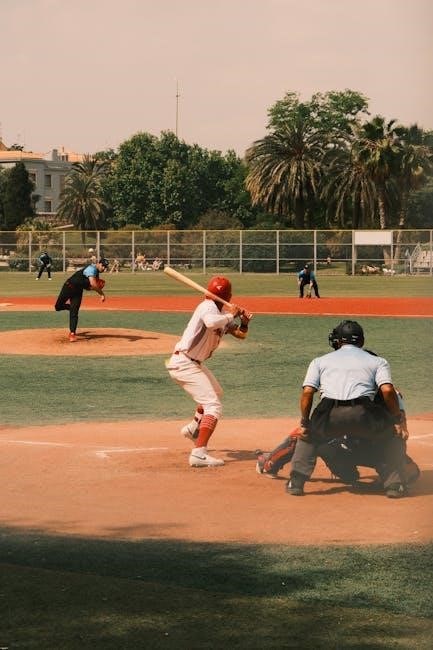
Advanced Baseball Strategy
Advanced baseball strategy encompasses nuanced decisions like intentional walks, pitching changes, and exploiting hitter weaknesses, demanding a deep understanding of the game.
Intentional Walks
Intentional walks represent a complex strategic maneuver, often employed to avoid a dangerous hitter or set up a more favorable matchup. Managers must carefully assess the game situation, considering the score, inning, and runners on base before issuing an intentional walk.
This tactic isn’t simply about avoiding a strong batter; it’s about manipulating the opposing lineup and increasing the probability of securing an out or inducing a double play. Utilizing this strategy effectively requires a keen understanding of hitter tendencies and potential outcomes.

When to Issue an Intentional Walk
Issuing an intentional walk is most common with a runner on first or second base and a potent hitter at the plate, particularly late in close games. Managers might choose this option to create a force out situation, potentially leading to a game-ending double play.
However, it’s a gamble; loading the bases introduces risk. Careful consideration of the following batter’s abilities and the pitcher’s command is paramount before deliberately putting a runner on base.
Pitching Changes
Managing the pitching staff effectively is a cornerstone of successful baseball strategy, often dictated by game situations. Pitching changes aren’t solely about fatigue; they’re about matchups and exploiting hitter weaknesses.
A manager might replace a starter with a reliever specializing in ground balls against a pull hitter, or bring in a closer with a dominant fastball in a save situation. Strategic pitching changes can dramatically alter a game’s momentum.
Managing the Pitching Staff
Effective pitching staff management requires careful consideration of individual pitcher strengths, workloads, and opposing hitters’ tendencies. It’s a delicate balance between maximizing performance and preventing injuries.
Managers must anticipate game flow, recognizing when a starter is losing effectiveness or when a specific reliever is best suited to face a particular batter. Utilizing data and understanding pitcher roles are paramount for success.
Defensive Positioning Based on Hitter’s Strengths
Strategic defensive alignments exploit hitter weaknesses and limit opportunities for success. Analyzing a batter’s tendencies – pull-hitting, opposite-field hitting, or a preference for certain pitch locations – informs positioning adjustments.
Shifts, while increasingly data-driven, remain a core component of situational defense. Understanding a hitter’s power zones and contact patterns allows for optimized infield and outfield placements, increasing the probability of making a play.
Exploiting Weaknesses
Effective defensive strategies center on identifying and capitalizing on a hitter’s vulnerabilities. This involves recognizing tendencies like difficulty hitting to a specific field or struggles against particular pitch types.
Positioning fielders to cover anticipated contact zones, based on these weaknesses, significantly increases the chance of an out. Pitchers should also focus on locating pitches that exploit those identified flaws, limiting offensive potential and maximizing defensive efficiency.